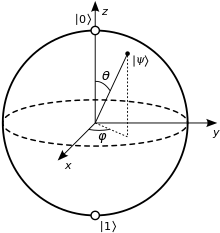
State Vector
A quantum state is typically represented by a state vector, often denoted as ∣ψ⟩, where ψ represents the quantum state. This vector encapsulates all the information about the quantum system.
Superposition
Quantum states can exist in superpositions, which means they can be a combination of multiple states simultaneously. For example, a quantum bit or qubit can be in a superposition of both ‘0’ and ‘1’ states.
Normalization
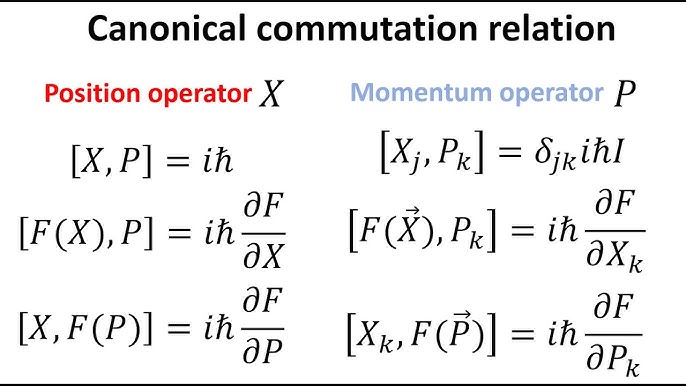
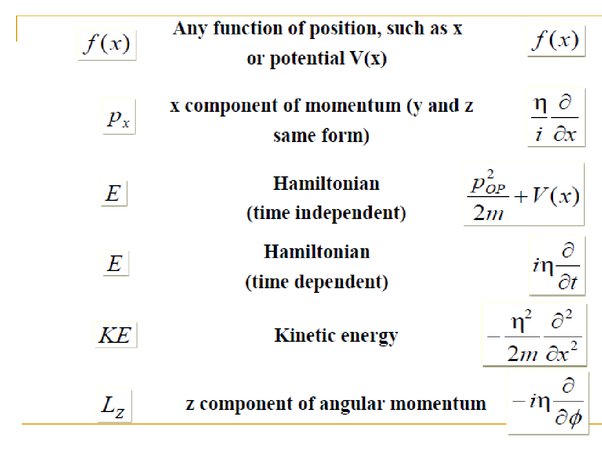
The main idea in Operaters:
Hermitian Operators
These are a special class of operators that play a crucial role in quantum mechanics. They have a property called Hermiticity, which ensures that their eigenvalues are real, making them suitable for measuring physical quantities.
Observables
Operators represent observables in quantum mechanics. For instance, the position of a particle is represented by the position operator, X, while momentum is represented by the momentum operator, P.
Eigenstates and Eigenvalues
Example of the mathematical representation of a qubit in superposition:
∣ψ⟩=α∣0⟩+β∣1⟩
Here, α and β are complex numbers that determine the probability amplitudes of measuring the qubit in the ∣0⟩ and ∣1⟩ states.