"TRY ROWING" -THEY SAID- "IT WILL BE FUN" -THEY SAID

Types of rowing boats

Racing boats (often called "shells") are long, narrow, and broadly semi-circular in cross-section in order to minimize drag. They have riggers, which apply the forces symmetrically to each side of the boat and (usually) a fin towards the rear which helps prevent roll and yaw. Originally made from wood, shells are now almost always made from a composite material (usually carbon-fibre reinforced plastic) for strength and weight advantages.

Single scull

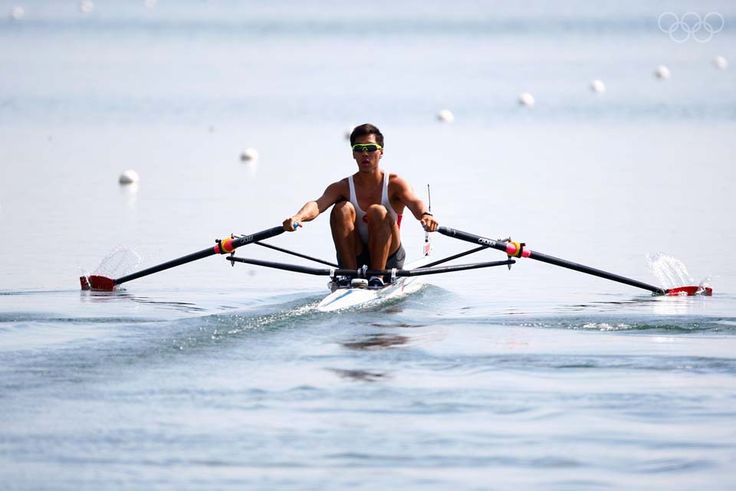
A single scull (or a scull), abbreviated as a 1x, is a racing shell designed for a single person who propels the boat with two oars, one in each hand. Recreational single sculls tend to be shorter and a little wider than racing boats and can have a slightly flattened hull shape to provide more stability. Recreational single sculls can be made of a variety of materials including carbon fiber, fiberglass, wood or rotomoulded polyethylene. The single scull is the 2nd slowest category of racing boat (faster than the coxed pair), and competitors are recognised by other rowers as among the toughest, both physically and mentally: single sculling is sometimes known as 'king's class'.
Double scull

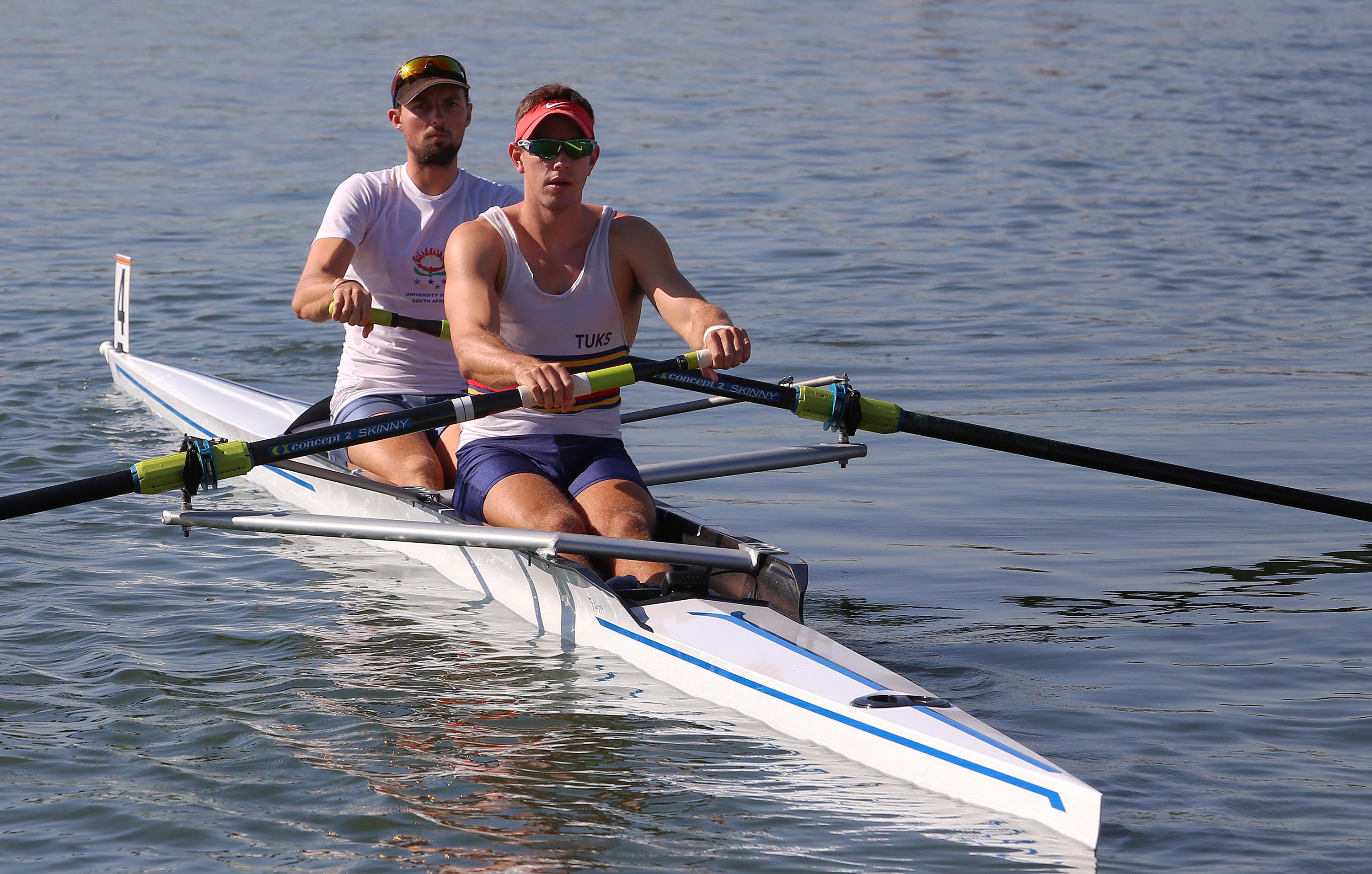
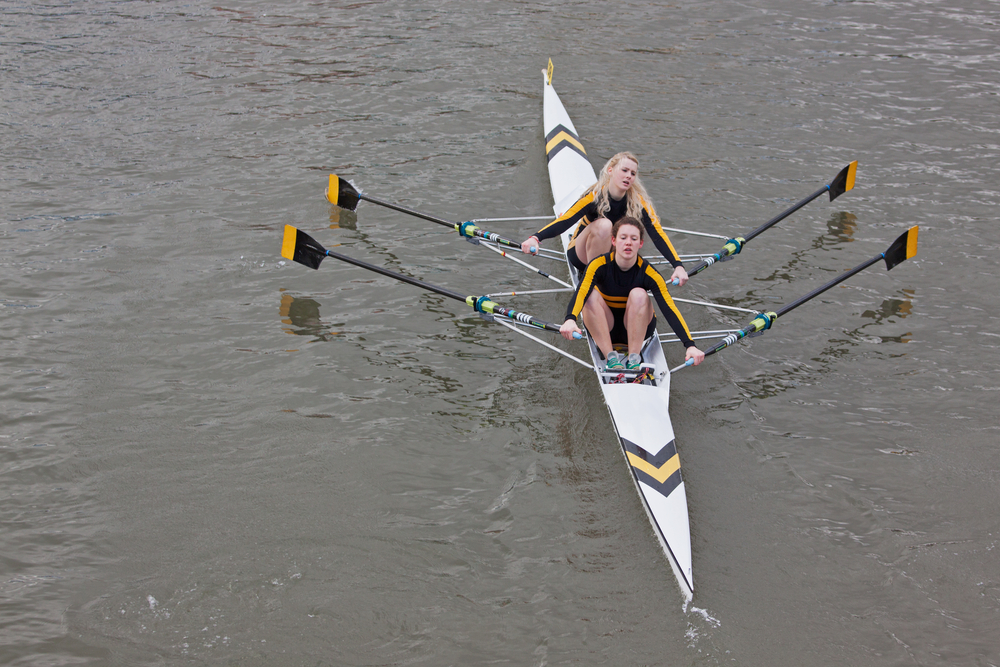
A double scull, also abbreviated as a 2x, is a rowing boat used in the sport of competitive rowing. It is designed for two persons who propel the boat by sculling with two oars each, one in each hand. Double sculls is one of the classes recognized by the International Rowing Federation and the Olympics. In contrast to the combination of the coxed pair, in which the distribution of the riggers means the forces are staggered alternately along the boat, the symmetrical forces in sculling make the boat more efficient and so the double scull is faster than the coxless pair. A double sculling skiff has a similar layout to a double scull and is rowed in a similar way, but usually has a cox as well as two rowers. It is clinker built with fixed seats and thole pins and can be skiffed for leisure purposes or for the sport of skiff racing.

Quadruple scull

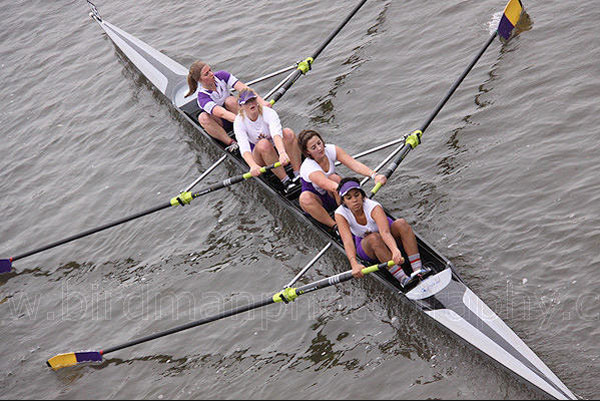
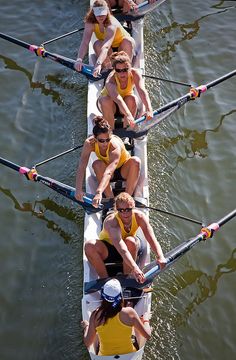
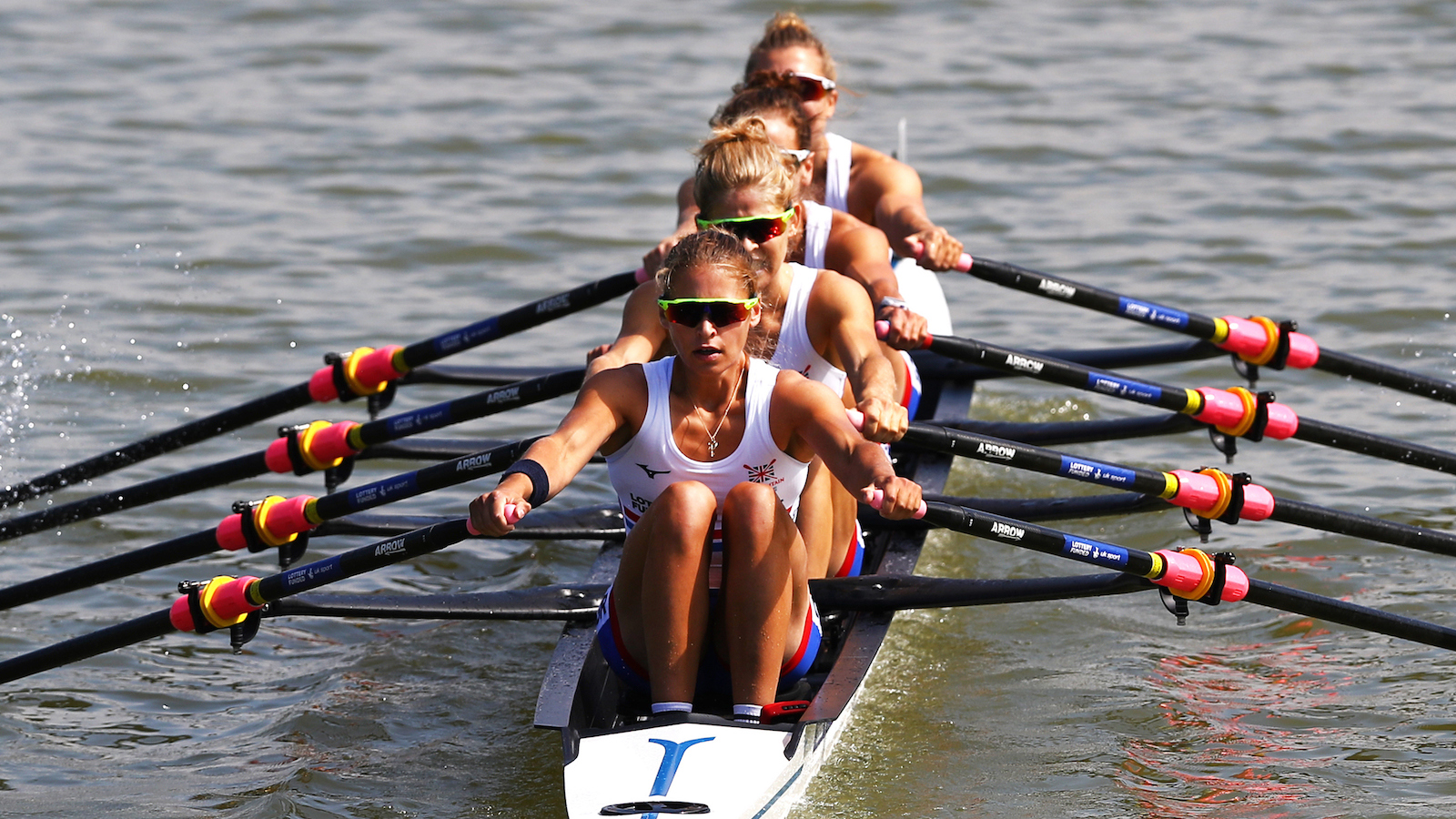
In sweep oared racing the rigging means the forces are staggered alternately along the boat. The symmetrical forces in sculling make the boat more efficient and so the quadruple scull is faster than the coxless four. A 'quad' is different from a 'four' in that a 'quad', or quadruple scull, is composed of four rowers each with two blades, sculling. A 'four' is made up of four rowers each with one oar in hand, sweeping.

Coxless pair

A coxless pair, abbreviated as a 2- and also known as a straight pair, is a racing shell used in the sport of competitive rowing. It is designed for two rowers, who propel the boat with sweep oars. The crew consists of a pair of rowers, each having one oar, one on the stroke side (rower's right hand side) and one on the bow side (rower's lefthand side). Two rowers co-ordinate steering and the proper timing of oar strokes between themselves or by means of a steering installation which is operated by foot from one of the rowers. A coxless pair is often considered the most difficult boat to row, as each rower must balance their side in cooperation with the other, apply equal power, place their catch and extract the blade simultaneously in order to move the boat efficiently.

Coxed pair

A coxed pair, abbreviated as a 2+, is a racing shell used in the sport of competitive rowing. It is designed for two persons who propel the boat with sweep oars and is steered by a coxswain (cox). The crew consists of two rowers, each having one oar, and a cox. One rower is on the port side (rower's right hand side) and other is on the starboard side (rower's left hand side). The cox steers the boat using a rudder and may be seated at the stern of the boat (from where there is a view of the crew) or in the bow (known as a bowloader). With a bowloader, amplification is needed to communicate with the crew which is sitting behind, but the cox has a better view of the course, and the weight distribution may help the boat go faster.

Coxless four

A coxless four, abbreviated as a 4- and also called a straight four, is a racing shell used in the sport of competitive rowing. It is designed for four persons who propel the boat with sweep oars, without a coxswain. The crew consists of four rowers, each having one oar. There are two rowers on the stroke side (rower's right hand side) and two on the bow side (rower's lefthand side). As there is no coxswain, the rudder is controlled by one of the crew, normally with the rudder cable attached to the toe of one of their shoes which can pivot about the ball of the foot, moving the cable left or right. The steersman may row at bow, who has the best vision when looking over their shoulder, or on straighter courses stroke may steer, since they can point the stern of the boat at some landmark at the start of the course.

Coxed four

A coxed four, abbreviated as a 4+, is a racing shell used in the sport of competitive rowing. It is designed for four persons who propel the boat with sweep oars and is steered by a coxswain. The crew consists of four rowers, each having one oar, and a cox. There are two rowers on the stroke side (rower's right hand side) and two on the bow side (rower's lefthand side). The cox steers the boat using a rudder and may be seated at the stern of the boat where there is a view of the crew or in the bow (known as a bowloader). With a bowloader, amplification is needed to communicate with the crew which is sitting behind, but the cox has a better view of the course and the weight distribution may help the boat go faster.

Eight

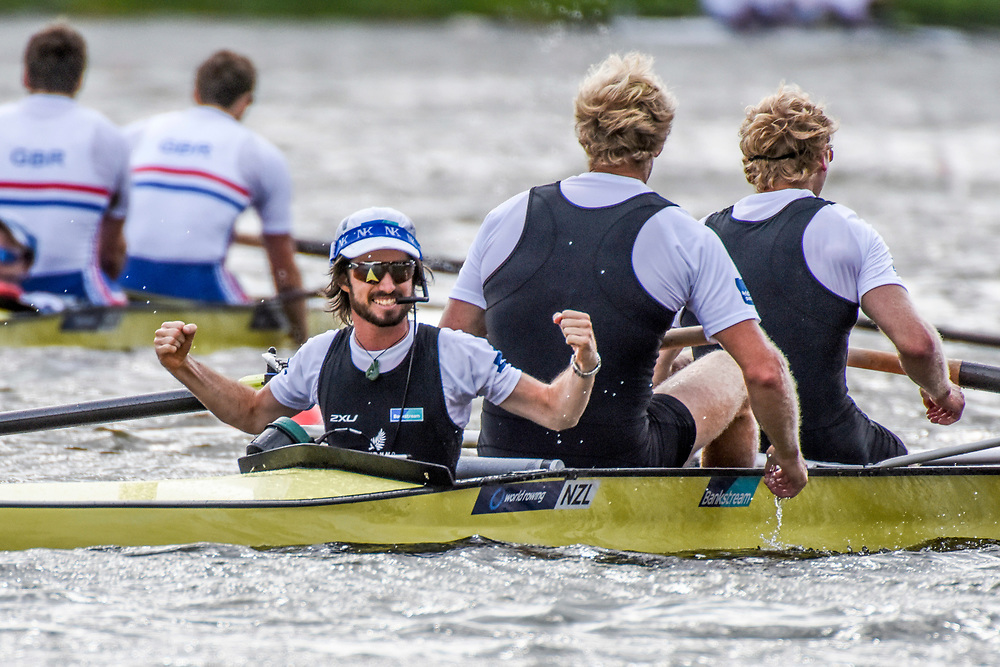
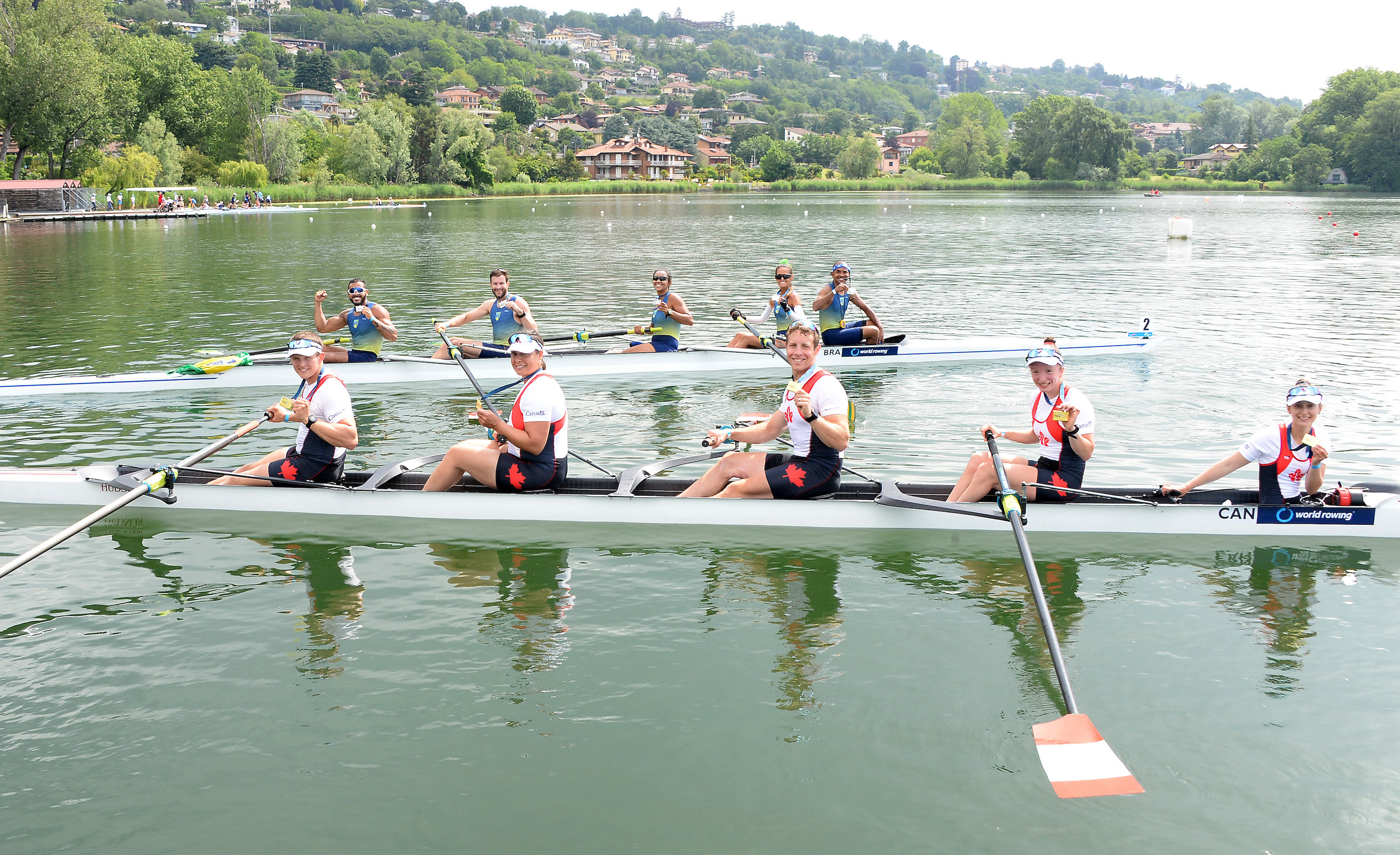
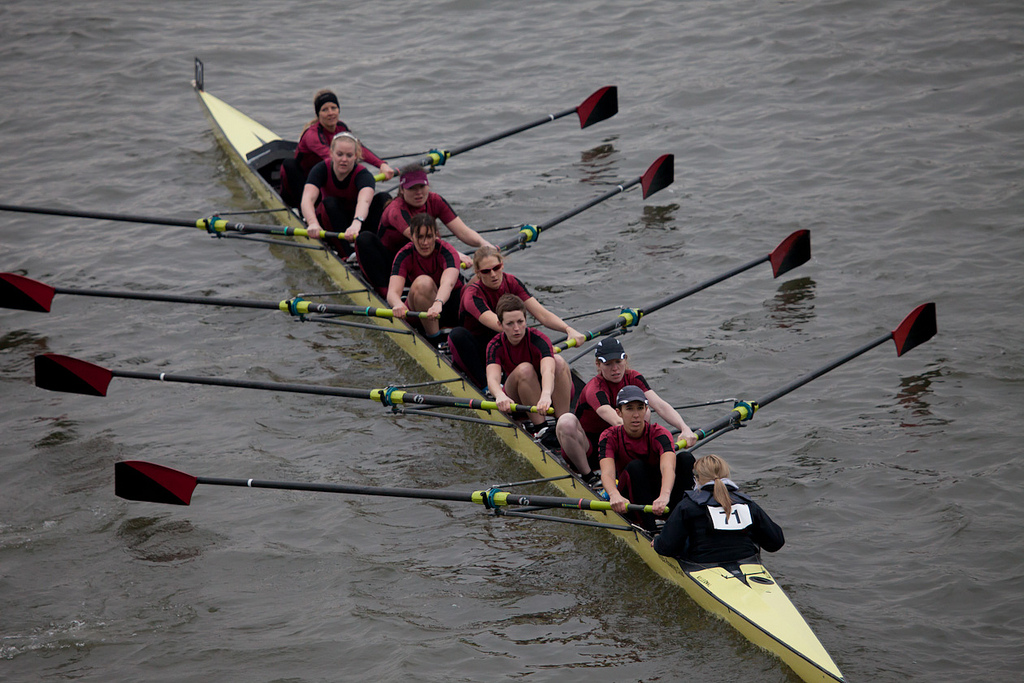
The crew consists of four rowers, each having one oar, and a cox. There are two rowers on the stroke side (rower's right hand side) and two on the bow side (rower's lefthand side). The cox steers the boat using a rudder and may be seated at the stern of the boat where there is a view of the crew or in the bow (known as a bowloader). With a bowloader, amplification is needed to communicate with the crew which is sitting behind, but the cox has a better view of the course and the weight distribution may help the boat go faster. Each of the eight rowers has one oar. The rowers, who sit in a line in the centre of the boat and facing the stern, are usually placed alternately, with four on the port side (rower's right hand side – also traditionally known as "stroke side") and four on the starboard side (rower's lefthand side – known as "bow side"). The cox steers the boat using a rudder and is normally seated at the stern of the boat. Because of the size, weight, and speed of the boat in comparison to the 4+ and 2+, it is generally considered unsafe to race the 8+ coxless or to have a bowloader cox.