Jellyfish Blog

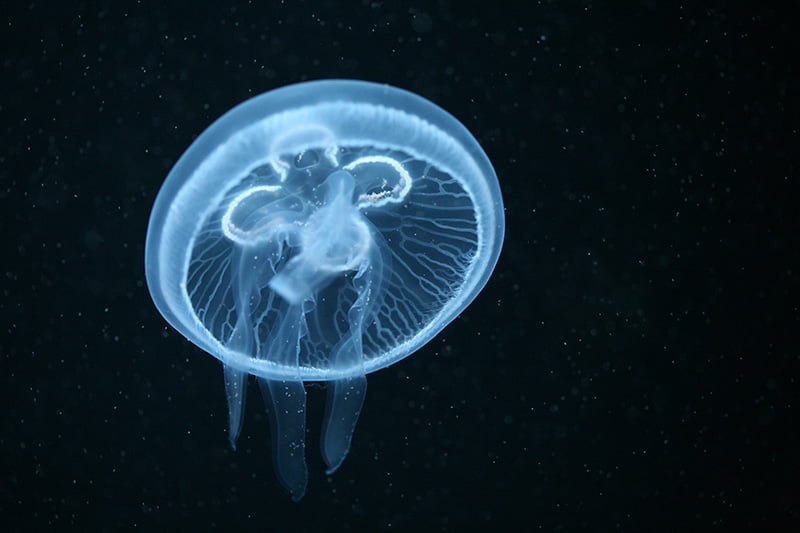
Moon Jellyfish (Aurelia aurita )

The moon jellyfish, or moon jelly, is found throughout the world's oceans. Around the size of a plate, it is recognisable by the four circles visible through the translucent white bell. These four circles are gonads, the reproductive organs located at the bottom of the stomach, and they are normally purple in colour. Moon jellies are common in UK seas and are often found washed up on shore. Jellyfish are 95% water and have no brain, blood or heart. Moon jellies have short, delicate tentacles that hang down from the sides of the bell. They catch their plankton prey using a layer of mucus over their bells before passing the microscopic meals into their mouth parts using special tentacles.
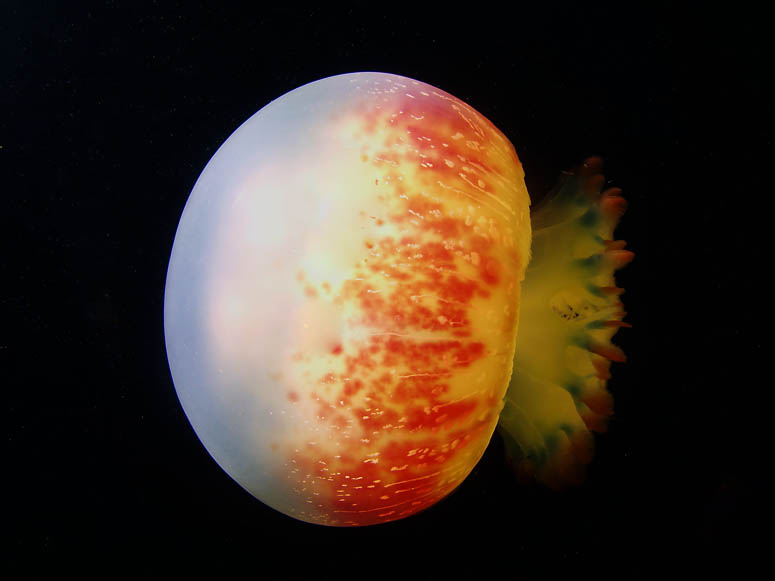
Cannonball Jellyfish (Stomolophus meleagris)

Cannonball jellyfish, known for their distinctive spherical shape, are intriguing inhabitants of coastal waters. With their large, translucent bells and frilly oral arms, they gently drift with ocean currents, playing a vital role in marine ecosystems. Characterized by their mild sting, cannonballs pose minimal threat to humans. However, caution is advised when encountering them to avoid potential irritation. Despite their size, they are passive swimmers, relying on currents for movement. These jellyfish contribute to the ocean's balance by controlling prey populations and serving as food for various marine species. However, like many marine creatures, they face threats from human activities, highlighting the importance of conservation efforts to protect their habitats and ensure their survival.

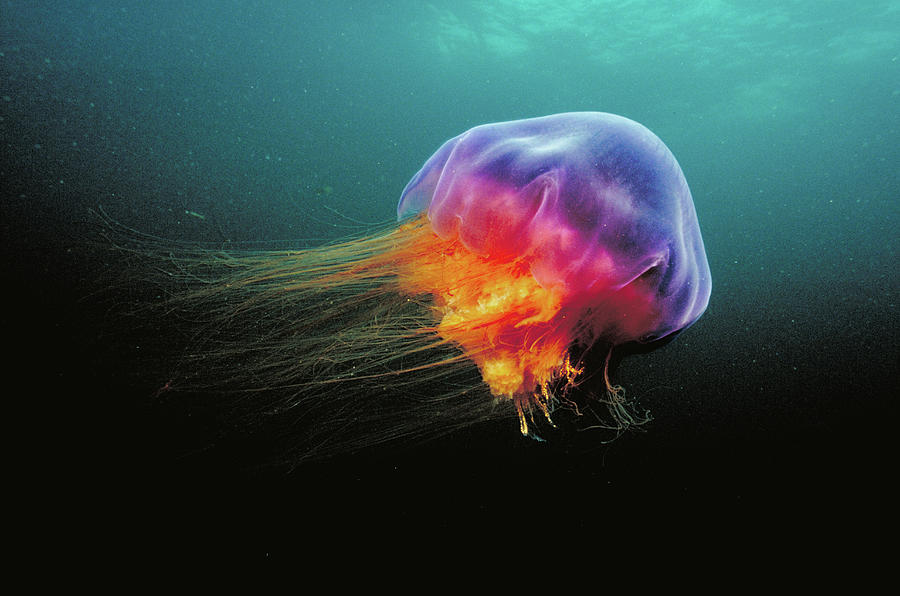
Lion's Mane Jellyfish (Cyanea capillata)

Lion's Mane Jellyfish, with their awe-inspiring size and distinctive appearance, are both captivating and cautionary denizens of the ocean. Characterized by their bell-shaped bodies and long, flowing tentacles, Lion's Mane Jellyfish are easily recognizable. Their tentacles, often reddish-brown in color, bear a striking resemblance to the mane of a lion, hence their name. While encounters with Lion's Mane Jellyfish are mesmerizing, their tentacles pack a potent sting. Though rarely fatal, their venom can cause significant pain, inflammation, and allergic reactions in humans. Vigilance and caution are advised when swimming in waters where they are present.

Sea Star Jellyfish (Marivagia stellata)

The Sea Star Jellyfish stands out with its ethereal beauty and unusual morphology. Unlike traditional jellyfish, it lacks a bell-shaped body, instead resembling a translucent, star-shaped disc. Its delicate arms, reminiscent of a starfish, extend outward from its central body, giving it a celestial appearance. Relatively little is known about Marivagia stellata, adding to its allure and mystique. It inhabits deep-sea environments, often beyond the reach of human exploration, making sightings rare and research challenging. Due to its deep-sea habitat, encounters with the Sea Star Jellyfish are infrequent, and interactions with humans are minimal. While it may possess stinging cells like other jellyfish species, its venom and potential danger to humans remain largely unexplored. Given its elusive nature and remote habitat, conservation efforts for Marivagia stellata are challenging. However, protecting deep-sea ecosystems from human impacts such as deep-sea mining and pollution is crucial for the preservation of this mysterious species and the delicate balance of marine biodiversity.